Presented on ZOOM Public Lecture April 13th at 7pm
ABOUT THE LECTURE:

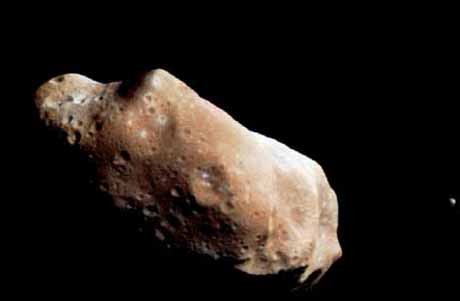
In this lecture, James introduces the fascinating world of asteroids, explaining what they are and where they can be found throughout our Solar System. Asteroids are small rocky bodies that orbit the Sun and are often described as the leftover building blocks of planet formation. James will guide us through the regions where asteroids are most commonly located, such as the Asteroid Belt between Mars and Jupiter, as well as other populations like Near-Earth Asteroids and Trojan asteroids that share or intersect planetary orbits.
The lecture then explores how asteroids formed during the early stages of the Solar System, around 4.6 billion years ago. James will explain how clouds of gas and dust surrounding the young Sun gradually clumped together through gravity to form planetesimals—small bodies that later combined to form planets. However, not all of these materials became planets; many remained as asteroids, preserving valuable clues about the conditions and materials present during the birth of our Solar System.
A major focus of the lecture will be the potential danger asteroids pose to Earth. James will discuss the history of asteroid impacts and how large collisions have influenced Earth’s geological and biological history, including events that may have caused mass extinctions. He will examine how scientists monitor asteroids that pass close to our planet and assess the risks posed by objects that could potentially collide with Earth.
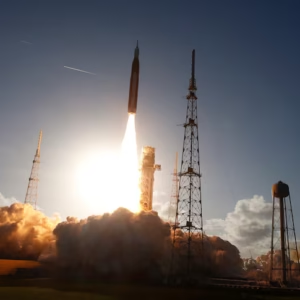
Finally, the lecture addresses planetary defense strategies—the methods scientists and space agencies are developing to protect Earth from a potential asteroid impact. James will outline current detection programs and explore possible technologies that could deflect or redirect an asteroid, such as kinetic impactors, gravity tractors, and other emerging space-based solutions.
By the end of the lecture, we will gain a clearer understanding of what asteroids are, how they formed, where they are found, the risks they pose, and how humanity might defend our planet from a future impact.
ABOUT THE SPEAKER:
James Fradgley

James is a passionate and highly skilled science communicator with a strong academic background in Physics and Astronomy, holding a Bachelor of Arts (BA) in Physics with Astronomy. His studies provided him with a solid foundation in astrophysics, planetary science, and the fundamental physical principles that govern our universe. Through both his academic training and personal enthusiasm for space science, James has developed a talent for explaining complex scientific ideas in a clear, engaging, and accessible way.
Over the years, James has built a reputation for delivering informative and inspiring public lectures, particularly in the field of astronomy and space science. He has previously given a number of highly regarded talks to audiences at Astronomy Ireland, where his presentations have been praised for their clarity, enthusiasm, and ability to bring the wonders of the cosmos to life for audiences of all backgrounds.