Warping Space and Time

Price range: €5.00 through €10.00

“Warping Space and Time”

Presented on ZOOM Public Lecture July 13th at 7pm


SKU: N/A Category:

Presented on ZOOM Public Lecture July 13th at 7pm

Space Time Warp

ABOUT THE LECTURE:

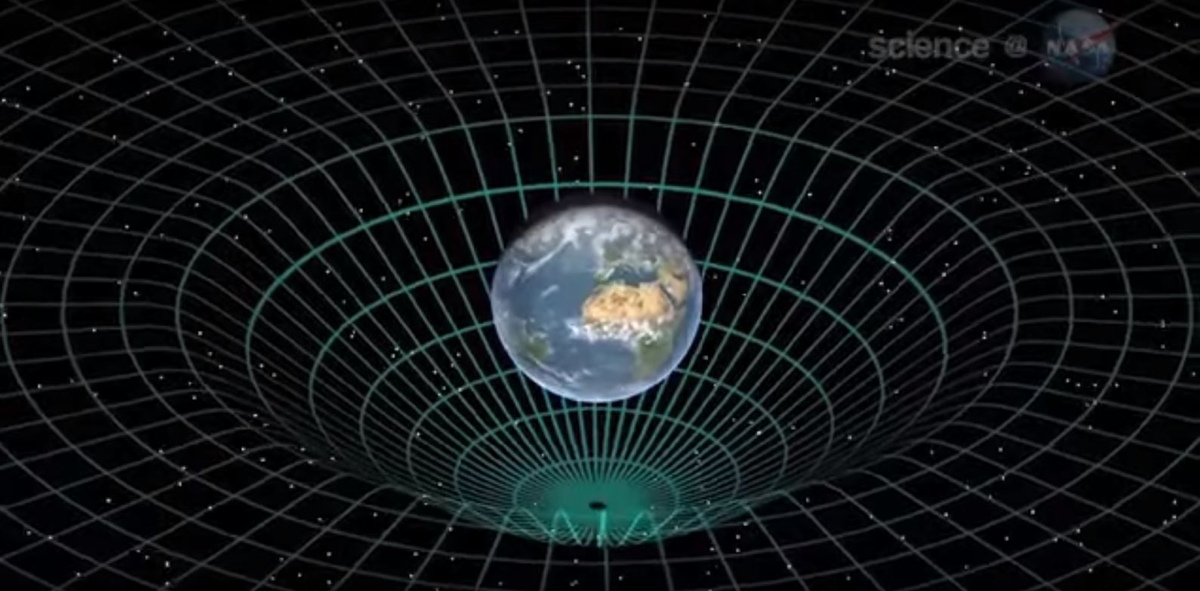
Warping space and time is one of the most fascinating ideas in modern physics. According to Albert Einstein’s theory of general relativity, space and time are not separate, fixed backgrounds against which events occur. Instead, they form a unified four-dimensional structure known as spacetime. Massive objects such as planets, stars, and black holes bend or “warp” this spacetime around them. What we experience as gravity is actually the effect of objects moving along the curved paths created by this warping. The stronger the gravitational field, the greater the distortion of spacetime, leading to measurable effects such as the slowing of time near massive bodies and the bending of light as it travels through space.

The concept of warping spacetime has also inspired ideas about advanced space travel and the nature of the universe itself. In theory, extreme distortions of spacetime could create phenomena such as wormholes, which are hypothetical shortcuts connecting distant regions of the universe, or warp drives, which would allow a spacecraft to effectively travel faster than light by contracting space in front of it and expanding space behind it. While these ideas remain speculative and face enormous scientific and technological challenges, they illustrate how the geometry of spacetime may hold the key to understanding both the largest structures in the cosmos and the possibility of traversing vast interstellar distances in the future.

.
.

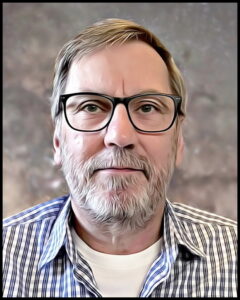
Steve Barratt


ABOUT THE SPEAKER:

Dr Steve Barrett,

University of Liverpool UK.

I am a Senior Research Fellow in the Department of Physics at the University of Liverpool. My research interests have centred around the applications of imaging and spectroscopy to fields such as nanoscience, geomaterials, biomedical imaging and infrared spectroscopy. My teaching to undergraduate students has covered many topics and included supervision of astrophysics students on astronomy field trips to the Teide Observatory in Tenerife.

My interest in astronomy predates my professional career as a physicist. I have given hundreds of astronomy-related talks to astronomical societies, special interest groups and schools to an audience totalling over 20,000 people. As a result of giving these outreach talks I was awarded the Sir Patrick Moore Prize in 2019 by the British Astronomical Association.


Scroll to Top