Black Holes and Compact Objects

Price range: €5.00 through €10.00

” Black Holes and Compact Objects”

Presented on ZOOM Public Lecture September 14th at 7pm
 

SKU: N/A Category:

Presented on ZOOM Public Lecture September 14th at 7pm

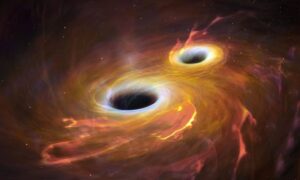
Black holes

ABOUT THE LECTURE:

Compact objects are the dense remnants of stars that have exhausted their nuclear fuel. They include white dwarfs, neutron stars, and black holes, with each type formed depending on the original mass of the star.

  • White dwarfs are the remnants of low- and medium-mass stars. They are supported against gravity by electron degeneracy pressure.
  • Neutron stars form after the supernova explosion of more massive stars. They are extremely dense and are supported by neutron degeneracy pressure. Some neutron stars are observed as pulsars, emitting regular pulses of radiation.
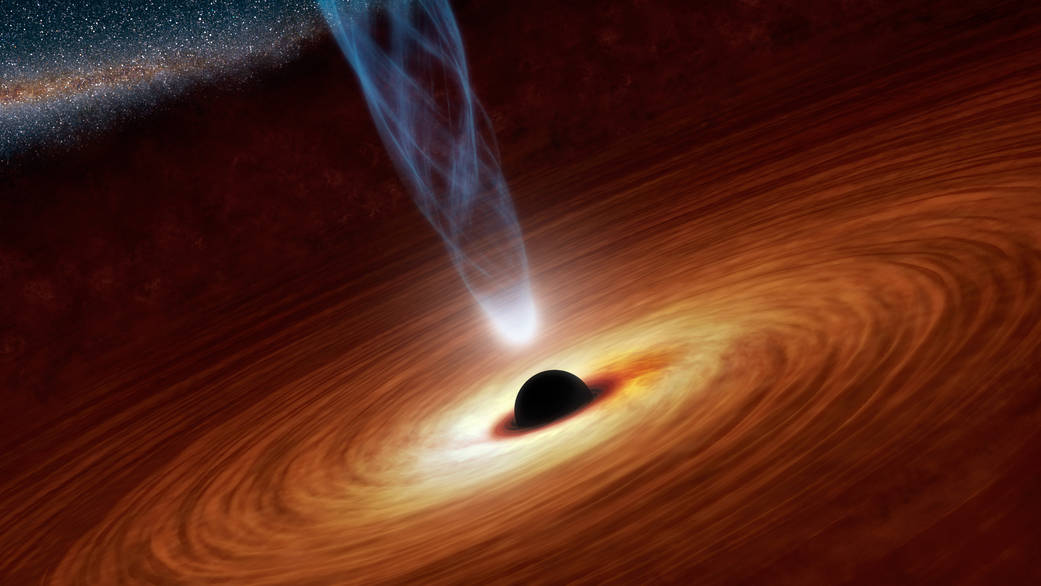
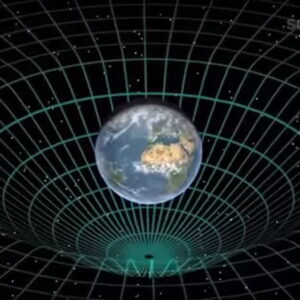
  • Black holes are formed when a very massive star collapses under its own gravity, creating a region where gravity is so strong that not even light can escape. The boundary of this region is called the event horizon.

Black holes are characterized mainly by their mass, spin (angular momentum), and electric charge (although astrophysical black holes are usually considered electrically neutral). They can be detected indirectly through their gravitational effects, the motion of nearby stars, gravitational lensing, X-ray emission from accreting matter, and gravitational waves produced during black hole mergers.

Gary Newport


ABOUT THE SPEAKER:

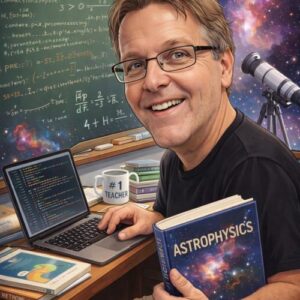
Gary Newport BA(QTS), MSc, FRAS

Gary is an astrophysicist, computer scientist, and educator based on the south coast of the United Kingdom. He combines active research in stellar evolution with a long-standing career in teaching, public outreach, and educational leadership.

His research focuses on the physics of stars — their formation from collapsing molecular clouds, their internal structure and energy generation, and their eventual evolution into white dwarfs, neutron stars, or black holes. He works extensively with computational stellar evolution models, modernising and analysing legacy code to explore how stars grow, shine, and ultimately enrich the universe with the elements essential for planets and life.

Gary completed his MSc in astrophysics in 2020 with the Liverpool John Moore University, completing this course by developing a model of the restricted three body problem and exploring Wisdom’s boundary between ordered and chaotic paths of the third body. Gary is also a teacher of mathematics and computer science, having achieved a mathematics degree with QTS through Southampton University back in 1997.


Lecture Tickets

Members (€5 – Half Price), Non-Members (€10)

Scroll to Top